project details
#overview
Scrape Up packages reusable web scraping workflows behind Python interfaces. It targets public information on platforms such as GitHub, Twitter, Instagram, and other useful sites, offering an alternative for experiments where an official API is unavailable or does not expose the required data.
The project grew as an open source package rather than a disposable script. That means contributors can add a scraper, document its inputs and outputs, and reuse common request and parsing behavior. Consumers receive structured Python data instead of having to understand each site's markup for every small task.
#install and run
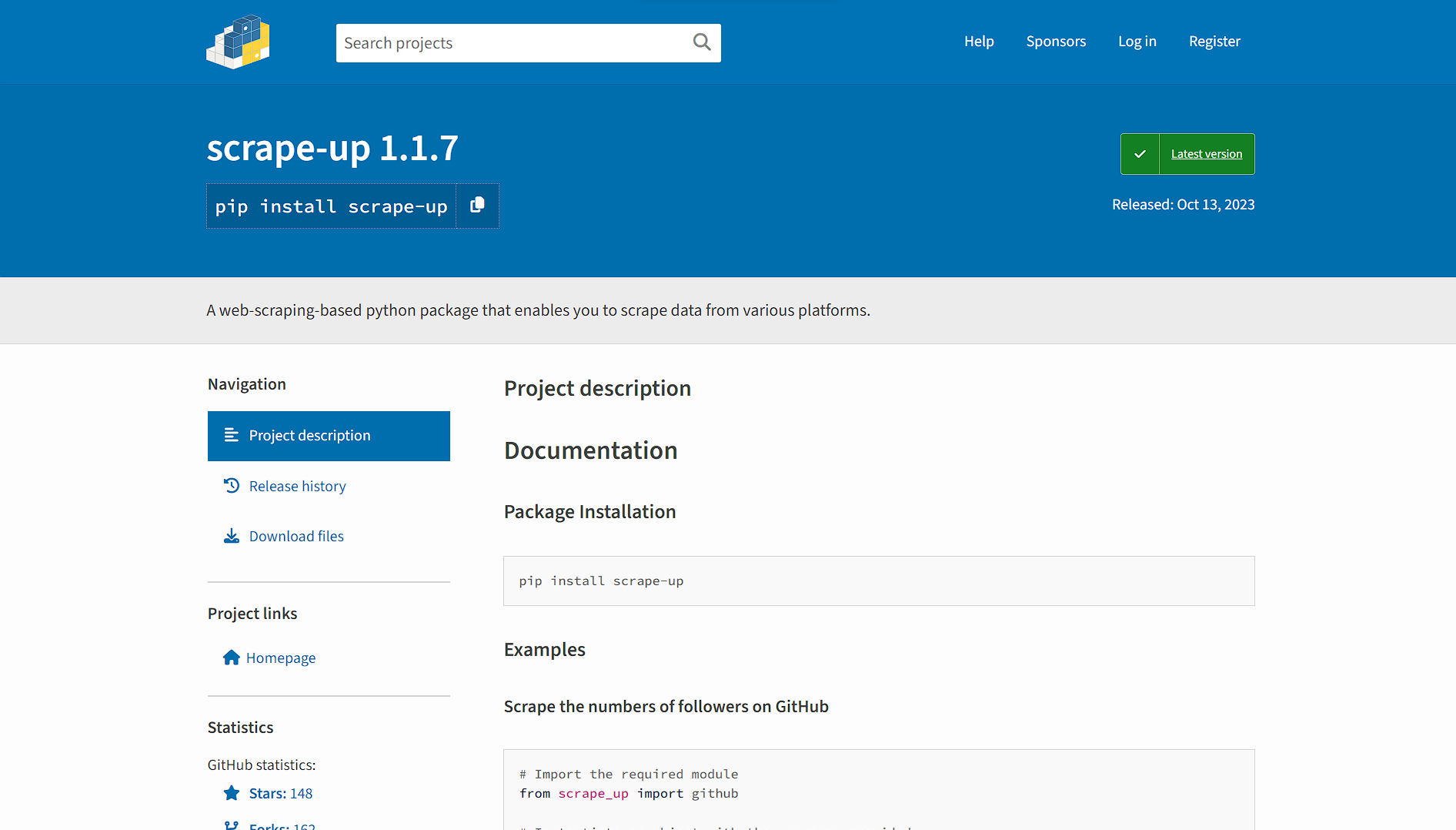
Install from PyPI
pip install scrape-up --upgrade#architecture and features
Python modules organize scraping behavior by source. HTTP requests retrieve public pages and Beautiful Soup helps locate and normalize the relevant elements. Package interfaces keep the calling style consistent even when the underlying websites differ.
Because scraping depends on external markup, each source remains isolated enough to be repaired without destabilizing unrelated integrations. Documentation and examples are important parts of the contract. They show which public URL or identifier is expected and what structured result a caller receives. Publishing through PyPI makes the package available without cloning the repository.
#using the project
- 01Install the published package or clone the repository for development. Choose the documented module for the target platform and provide the public identifier or URL expected by that scraper.
- 02Call the scraper from a small Python program and handle network failures or missing fields as normal external data conditions. Cache results when repeated requests would otherwise place unnecessary load on the source website.
- 03Before using scraped data, review the source site's terms, robots guidance, privacy expectations, and applicable law. Website markup can change without notice, so pin a known package version for important workflows and contribute a focused fixture or parser update when a source changes.