project details
#overview
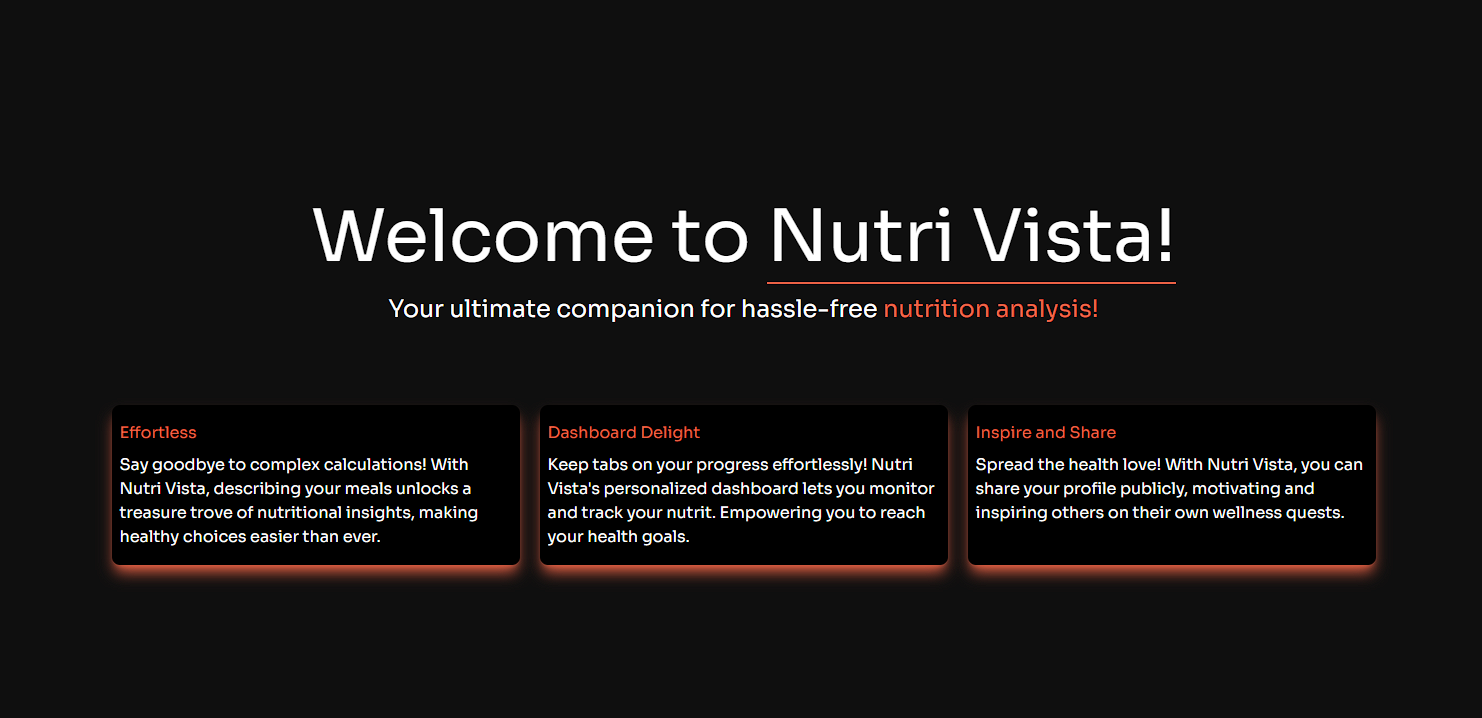
Nutri Vista is a nutrition analysis and meal tracking application designed to reduce the friction of recording food. Instead of forcing every ingredient through a dense form, it accepts natural meal descriptions and turns the result into structured nutrition information. A personal dashboard then helps users monitor their choices and progress over time.
The experience focuses on the loop between logging, understanding, and adjusting. Users can enter what they ate, inspect the resulting nutritional breakdown, and return to a visual history rather than treating each analysis as a disposable lookup. That makes the project both a text processing interface and a small personal data product.
#architecture and features
The application is built with TypeScript and Next.js, combining routes rendered on the server and application APIs in one project. MongoDB stores user and meal records, while NextAuth manages authenticated sessions. Browser caching reduces repeated work and keeps commonly accessed results responsive.
The data model separates the original meal description from the structured analysis so the interface can show both what the user entered and what the system derived. Dashboard views aggregate saved meals into graphical summaries. Validation at the API boundary protects data for each user and keeps malformed nutrition records out of the history.
#using the project
- 01Clone the repository, install its JavaScript dependencies, and create the documented environment file. Configure MongoDB, the authentication provider, and any nutrition analysis service required by the current repository version.
- 02Start the Next.js development server and authenticate through the configured provider. Enter a meal as ordinary text, review the returned nutrients, and save the result when it accurately represents the meal.
- 03Use the dashboard to browse previous entries and observe trends. For deployment, provide the same environment values through the hosting platform, keep service credentials private, and use a persistent MongoDB database rather than local development storage.